
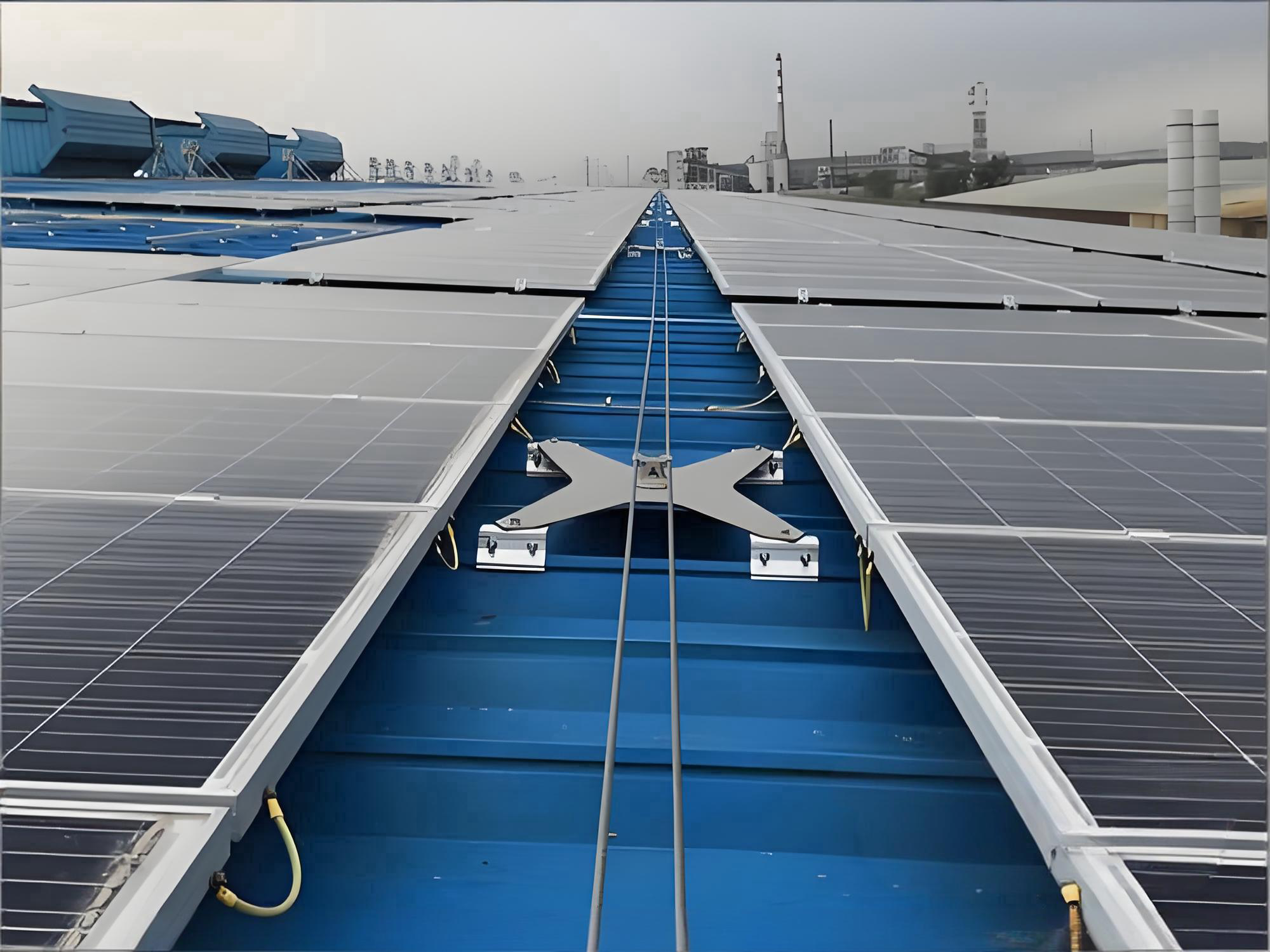
Working at height is a common part of rooftop construction, solar panel installation, and building maintenance. However, unprotected roof edges, fragile roof surfaces, and changing working conditions can expose workers to serious fall hazards.
As the solar industry continues to expand, the demand for reliable rooftop safety solutions is also increasing. Solar PV installers and operation and maintenance (O&M) teams frequently need to access rooftops for module installation, inspection, cleaning, troubleshooting, and equipment replacement.
A Horizontal Lifeline System is an important fall protection solution designed to help protect workers moving horizontally along elevated work areas. When properly designed and installed, it provides a continuous connection to a fall protection system while allowing workers to move along the roof.
In this guide, 1SOLARWOLF explains how horizontal lifeline systems work, their main components, common applications, and their importance in solar rooftop installation and maintenance.
A Horizontal Lifeline System (HLL) is a fall protection system consisting of a flexible or rigid horizontal lifeline secured between two or more structural anchorage points.
Workers connect to the lifeline using compatible connecting equipment, such as a lifeline trolley, rope grab, or other approved connecting device.
As workers move along the lifeline, the connecting device travels with them, allowing horizontal movement while maintaining a connection to the fall protection system.
Horizontal lifeline systems are commonly used on commercial and industrial rooftops, metal sheet and standing seam roofs, solar PV installation projects, rooftop inspection and maintenance areas, and industrial facilities.
Depending on the application, a horizontal lifeline can be designed as a wire rope system or a rigid rail system.
The basic operating principle is to maintain a continuous connection between the worker and the installed lifeline.
Step 1: Structural Fixing
The lifeline system is secured to suitable structural anchorage points. The fixing method must be compatible with the roof structure and capable of transferring the forces generated during a fall.
Step 2: Lifeline Installation
A horizontal wire rope or rigid rail is installed between the designated supports according to the system design and manufacturer's specifications.
Step 3: Worker Connection
Workers connect their compatible full-body harness and connecting equipment to the lifeline through an approved trolley or connecting device.
Step 4: Horizontal Movement
The worker moves along the roof while the connecting device travels along the lifeline, maintaining a connection throughout the designated working area.
Step 5: Fall Protection
If a fall occurs, the system is designed to arrest the fall within its approved operating conditions. The resulting forces are transferred through the lifeline and anchorage structure.
The complete system must be engineered, installed, inspected, and used according to applicable standards and manufacturer instructions.
A complete horizontal lifeline system consists of several coordinated components.
The wire rope serves as the primary horizontal connection between the supporting points. Stainless steel wire rope is commonly selected for outdoor environments where corrosion resistance is important.
A trolley or slider travels along the lifeline and provides a connection point for the worker's fall protection equipment.
A suitable sliding device allows workers to move along the system without repeatedly disconnecting and reconnecting.
These components support the horizontal lifeline and transfer system loads to the supporting structure. Their configuration depends on the system design, span, and number of users.
Roof fixing components connect the fall protection system to the roof structure.
For metal roofs, compatible roof clamps and fixing brackets can provide an installation interface without unnecessarily modifying the roof surface. The correct fixing solution depends on the roof profile, material, structural capacity, and system requirements.
Depending on the system design, tensioners help establish the specified wire rope tension, while energy-absorbing components help manage forces generated during a fall.
Not every system uses identical components. The configuration must follow the manufacturer's engineered design.
Solar rooftops create specific safety challenges because workers often need to move across large roof areas while working close to roof edges and other fall hazards.
During solar PV installation, workers may need to transport and position solar modules, install mounting rails and roof attachments, connect electrical cables and inverters, work around roof edges and access points, and inspect or adjust mounting structures.
During solar PV operation and maintenance, workers may also need to inspect modules, clean panels, replace damaged components, and troubleshoot electrical equipment.
A properly designed horizontal lifeline system can provide a designated fall protection connection along the working area, helping workers move more safely during these activities.
For EPC contractors, solar installers, and O&M providers, integrating rooftop fall protection into the project planning stage can improve access planning and support safer long-term maintenance operations.
Metal roofs are widely used in commercial and industrial buildings, making roof compatibility an important consideration when selecting a fall protection system.
Before choosing a horizontal lifeline system, consider the following factors:
Roof Profile and Material
Different standing seam and trapezoidal metal roof profiles require different fixing solutions. The attachment must be compatible with the actual roof profile.
Structural Capacity
The roof structure and fixing points must be evaluated to ensure they can withstand the loads generated by the fall protection system.
System Length and User Capacity
The required lifeline length, number of users, intermediate supports, and potential deflection must be considered during system design.
Fall Clearance
Sufficient clearance below the working surface is essential. System deflection, connecting equipment, worker height, and other factors must be included in the calculation.
Environmental Conditions
Outdoor rooftop systems should consider corrosion resistance, weather exposure, temperature changes, and long-term maintenance requirements.
Applicable Standards
System selection, installation, and inspection must comply with applicable local regulations and relevant fall protection standards.
At 1SOLARWOLF, we focus on rooftop fall protection solutions for solar PV installation, operation and maintenance, and other elevated working environments.
We understand that rooftop safety is not only about selecting a lifeline system. It also involves finding suitable fixing solutions that work with different roof structures and installation conditions.
Our product range includes:
Horizontal Lifeline Systems
Wire Rope Lifeline Components
Lifeline Trolleys and Sliders
Roof Fixing Clamps and Brackets
Rooftop Fall Arrest Components
Supporting Accessories for Metal Roof Applications
For solar EPC contractors, PV installers, O&M providers, and fall protection system companies, 1SOLARWOLF aims to provide practical product options and compatible rooftop fixing solutions.
Whether you are developing a new rooftop safety system or sourcing fixing components for an existing fall protection solution, choosing compatible products is an important step toward building a reliable installation.
A Horizontal Lifeline System is an important part of rooftop fall protection, especially in environments where workers need to move horizontally across elevated surfaces.
From commercial metal roofs to large-scale solar PV installations, a properly designed system helps maintain worker connection while supporting safe access for installation, inspection, and maintenance activities.
However, effective fall protection depends on more than the lifeline itself. Structural fixing, compatible components, correct installation, fall clearance, and regular inspection all play essential roles.
1SOLARWOLF supports safer rooftop work with fall protection systems and roof fixing solutions designed for solar PV and industrial applications.
Explore our rooftop fall protection products and discover practical solutions for your next project.